


RV Tips:
Some Thoughts On Bringing Out The Best In Your Class C Motorhome
The primary goal of this page is to provide some RV tips and make a couple of specific suggestions on how to get the
most recreational performance
out of your Class C Motorhome.
Control What You Put In Your RV

All of this along with a some RV tips on just how we can Improve our lighting performance is another area where most of us can benefit.
I also want to point out some rv tips on how to protect your rig from a variety of stuff that can happen to an unprotected, isolated motorhome over the winter months.
When winter comes, you may have to deal with a freezing climate. The good news is that there are some things you can do to protect your investment.
There are also issues with how to prepare the engine, drive-train, and tires for harsh winter conditions... and you will not want to overlook your batteries!
You may want to store your Class C Motorhome and hunker down for the winter, drive south to warmer climates, or park your unit in the snow and have fun... it just takes a little planning, some key RV advice, and you are good to go!
Hopefully, these RV tips will give you information that allows you to reduce your RV's weight and get you to your favorite destination trouble-free and ready for fun.
This topic can be a little bit daunting. In a sense, I have to put myself in the shoes of all Class C Motorhome owners... My attempt is to give some good RV maintenance tips to various owners with experience ranging from the newest "wet behind the ear guy" through to the seasoned vet that has "been there done that".
And yet, an RV tip for the new owner could be "old hat information" for the veteran. On the other hand, an RV tip for the "seasoned vet" could be a bit much for a new owner.
I'm taking the risk of compromising my RV tips and suggestions and not giving full benefit to each extreme Class C Motorhome owner segment.
However, I'm going to charge on in the hopes of not overwhelming one segment and boring the other. You can use the Response And Comment Page if you have any questions or concerns about any RV tips and suggestions that I may have. If we get a good dialog going here, I will probably set up some type of forum and let you guys bounce things around a little bit and give some good RV advice.
Class C Motorhome Weighs
If you are stressing over your CCC (Cargo Carrying Capacity), it may be time to discuss the problem that we are all faced with... that is weight. Not our weight, our rig's weight. A new Class C Motorhome owner (and us old guys) may not fully appreciate all of the pitfalls involved with potentially overloading our rigs with all of our favorite toys. Even the seasoned vets may, over time, allow an overloading condition to occur just because it is easy to do and available accessories are almost limitless.
To utilize their rigs to their fullest potential, a lot of Class C Motorhome owners will pack a bunch of aftermarket stuff into them. People have a tendency to fill up the available storage spaces.
Spoil Your Vacation
We have all purchased our rigs for our personal benefit and to enhance our RV lifestyle. Whether we are only wanting to take short local trips and stay connected to some type of shore power for all of our electrical needs or make the 6,000 mile drive to Alaska where it may be necessary to camp off of the grid, we can soon realize that our rigs may not satisfy our needs because we do not have unlimited cargo space and weight capacity.
There is also the potential
Phantom Loads that will drain our big deep cyle batteries
while we are trying to use all of our aftermarket toys. We need to focus on just exactly what our needs are.
All RV's, no matter the type or model, are prevented
from carrying everything the owner may want, due to weight restrictions... and sometimes the lack of storage space.
At that time, we need to make the best choices when
choosing the stuff we take with us.
Before You Buy Your Rig
Class C Motorhomes come in a variety of sizes, but their storage and weight limitations are not always considered until after the purchase. This may become apparent when we start to realize a conflict that surfaces when we begin the process of buying and storing our aftermarket stuff.
However, there are rigs on the market that could help you out. There is a lot of RV information out there on various models of Class C Motorhomes that use multiple truck chassis from less than 24' up to and including rigs that use professional tractor truck running gear and chassis.
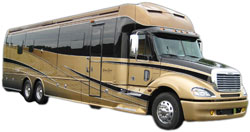 These are the same truck chassis that carry tons of commercial cargo hundreds of thousands of miles. These diesel pullers are able to compete very well with the top of the line Class A diesel pushers.
Therein lies the problem when talking about a specific class of RV and aftermarket purchasing decisions. Cargo Carrying Capacity on this wide variety of Class Cs can range from over 20,000 lbs to under 500 lbs. It is hard to pinpoint what would be termed average, let alone keep track of the multiple variables that are available.
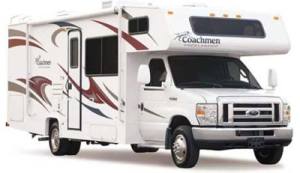
For example, when referring to the Ford E-450 chassis, most of us would see that it has a GVWR of 14,050 lbs. However, with the newer 2008 model E-450, Ford has changed their GVWR to 14,500 lbs. All things being equal, this would give us another 450 lbs of CCC on this particular chassis.
Whether you are new to motor homing or have been "around the block”, I cannot overstate that the biggest RV tip that I can give you is to be aware of the total weight of your vehicle. Simply put, if you do not know what the weight of your vehicle is, you will not know how much aftermarket accessories you can lug around.
As an example, if the size of your rig determines what weight limitations you have and you want hydraulic jacks to help make the task of leveling your RV much easier, you will need a rig that can can support this added weight. It may be that just having an efficient RV leveling system will be all you need to get set up in camp.
You have to have your rig weighed. If you have never used a professional scale to determine the exact weight of your vehicle, you are just guessing. Even if you pay attention to the manufacturer’s carrying capacity sheet that comes with your unit, you are still just guessing. Do NOT rely on anything the salesman tells you on this matter. Some are very good… some aren’t.
Oh yeah! One last piece of RV information... the lighter your vehicle, the better the fuel economy you will get!
Return To Top Of Page
Leave RV Tips: Some Thoughts On Bringing Out The Best In Your Class C Motorhome. And Return To The, Class C Motorhome Info Made Simple Homepage

Your Stories
Onan AC Generator Wouldn't Start
1995 Tioga Montara Had a Leak - Ouch!
A Simple Way To Put An Elecrtrical Thermostat On A Small Space Heater In A Truck Camper!
A Great Destinaton, With An Unexpected Outcome!
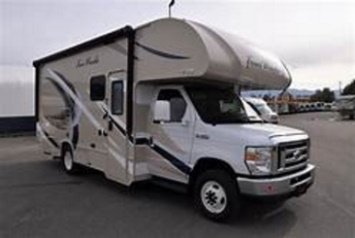
2018 Thor 21F Four Winds Class C Motorhome
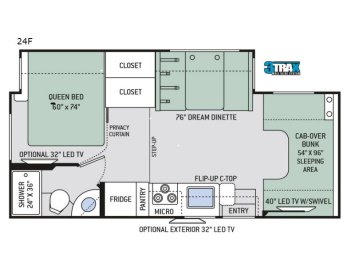
2018 Thor 21F Four Winds Class C Motorhome
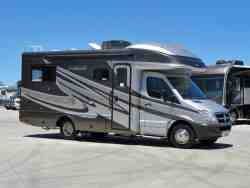
2010 Fleetwood Pulse 24D
Class C Motorhome
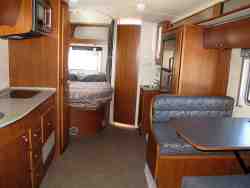
2010 Fleetwood Pulse 24D
Class C Motorhome
Above Graphics Courtesy of:
http://www.DeMartini.com
| Gasoline Prices |