


A Motor Generator:
The Gensets Are The Most
Complex System We Have
- 32 degrees and higher: SAE VISCOSITY GRADE 30
- 10 degrees F to 100 degrees F: SAE VISCOSITY GRADE 15W-40
- 0 degrees F to 80 degrees F: SAE VISCOSITY GRADE: 10W-30 and 10W-40
- -20 degrees F to 50 degrees F: SAE VISCOSITY GRADE 5W-30
- Weight: if it doesn't support itself, any added weight could stress the exhaust header connection.
- This potentially allows escaping toxic gas (carbon monoxide) to enter the vehicle living area.
- Fit: an improperly designed and assembled exhaust vent that takes the exhaust to the roofline may not be effective and allow leaks.
- Exhaust Direction: if you do get the exhaust to the rooftop, there is a possibility that carbon monoxide will be sucked into the rooftop air condition, random vents, or possibly windows.
- Back Pressure: because of exhaust attenuation issues.
- It seems the goal is equal length to equal flow. However, there are no straightforward mathematical formulas to achieve the perfect exhaust header.
- It is sort of a trial and error thing.
- This means, according to Onan, that possible back pressure could result, which would reduce engine performance and potentially cause failure to meet government regulated exhaust standards.
- It seems the goal is equal length to equal flow. However, there are no straightforward mathematical formulas to achieve the perfect exhaust header.
- Warranty: last but not least, an exhaust extension may void the Cummins/Onan warranty.
 Custom Search
Return To Top Of Page
Leave A Motor Generator: The Gensets Are The Most Complex System We Have, And Return To RV Maintenance: Now That You Have Been Using Your Class C Motorhome...
Leave A Motor Generator: The Gensets Are The Most Complex System We Have, And Return To Class C Motorhome Info Made Simple Homepage
We Need To Enjoy Our Great Outdoors...
And May Help You Out At Home Too
AC Generators make your home on wheels a very pleasant way to spend time in any remote area, such as a National Park or a remote BLM (Bureau of Land Management) location.
A motor generator will allow a modern Class C Motorhome to give you all the conveniences of a brick and mortar home. Very few of our favorite conveniences will operate without a source of electrical power.
It is easy to take our electrical 12 VDC and 120 VAC systems of power for granted. We are used to simply being able to plug stuff in and expecting it to work. When we are out in the woods, and stuff happens... well, worse case scenario is to simply pull up steaks and come home.
If you are at home and you lose power things are a bit different. You can however, use your electric generator as a source for alternative AC power.
If you are able to park your Class C Motorhome on your property, use this AC generator as an emergency generator. During any type of power outage due to storms or other mishaps you could still have power if your motor generator was accessible.
Fire-Up The Old Electric Generator...
You Can't Even Get It To Clck
This subject of motor generators reminds me of the time I was camping at Calaveras Big Trees State Park, a couple of years ago. On the 3rd day or so, I went to fire up the electric generator and nothing happened. I didn't even get a click.
My first thought was that I had a dead battery. But, a quick voltage check eliminated that option. I couldn't figure it out.
We were going to leave the next day, so I just let it go until I got home. I needed time to think about it.
I talked it over with my brother, and he said all motor generators had a centrifugal clutch that relies on momentum. This made sense to me, but I decided to go to an RV forum site for further advice.
I got a response indicating that I should check and make sure that my crankshaft did not stop "top dead center".
It seems that a motor generator uses a type of centrifugal clutch that will not work when the crank stops in this position... my older brother, Phil, had told me the same thing.
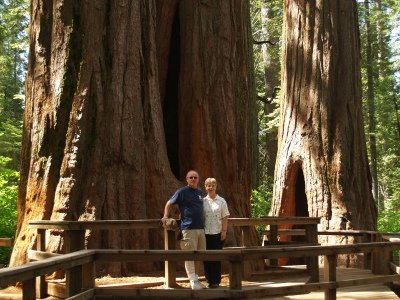
Old Growth Redwoods
The solution was to put a socket on the crankshaft, bolt, and give it a pull. I did, and it turned the crank with a bang! It has been working fine ever since...
Depending on where you are going in your Class C Motorhome, there are a couple of areas concerning your motor generator that will need attention.
As an example, for every 1,000 ft in elevation that you travel, you will either gain or lose 3.5% of rated power. This depends on whether you are going up or down. Closer to sea level your horspower increases. Going "up" to Denver CO... your power will decrease.
There is an adjustment on all Class C Motorhome gensets to help compensate for this altitude deferential. If you are going from high altitude to a lower altitude, you have to adjust in the opposite direction than if you were gaining in elevation. You will find specific instructions on how to do this in your Operating Manual.

Motor Generators are a very complex piece of equipment. This is an item that I feel truly needs to be serviced by an expert technician.
I am sure some of you out there, are capable of servicing your unit. That's fine. But for the rest of us, take it to an expert... less stress.
Here's something to think about... when you are out exploring the country, are you staying within the temperature zone for your oil viscosity?
For most of us, this probably isn't a real issue... as we try and stay in the warm areas but avoid places that are hot or too cold.
Even so, if you are driving around a country as diverse as ours, you will, on occasion, find yourself in either a too hot or too cold of an area.
When it comes to oil viscosity, if you can just figure out where you will be most of the time, it will not harm your generator or vehicle engine if you are out of tolerance once in a while.
However, there may be some things to consider...
If your temperature becomes extremely hot:
If you do not want to change the oil in your genset, just run it in for service every 150 hours.
There are some things that the average guy can do with their motor generator. Remember, only you are going to determine exactly where you are running your unit, not a technician...
As an example, under normal conditions, a filter change for an Onan 4000 is every 150 hours.
 If you know that you are going to be in a dusty environment, check and change your air filter more often. If you also know that you will be there for a prolonged period of time, bring extra filters.
 Then it's simply a matter of following the instructions in your Operating Manual.
You would also want to inspect the genset's compartment. It may need to be cleaned up a bit... dust is an insulator. You want to make sure that your genset's cooling fins do not clog up.
Exercise Of Your Unit
I was kicking around the Onan site and I came across a couple of thoughts.
They are very insistent about the proper exercising of any Onan Genset. I normally run mine a minimum of 30 to 40 minutes a month with an air conditioner or heater running.
It seems that I may not be doing enough... Onan's comments are:
-
"It may seem strange that 'not' using a machine could cause performance problems, but with RV generators that's exactly the case. Regular 'exercise' is an important part of keeping your generator healthy.
Lack of exercise can cause moisture build-up and fuel system damage that make it run poorly. In fact, in as little as 30 days, the fuel in gasoline-powered generators can begin to break down into gums and varnishes that clog the fuel system.
Fuel varnishing results in hard starting and surging. (A surging generator never settles at a stable operating speed.)
To prevent such problems, we recommend running gasoline generators at a minimum of 50 percent capacity (2000-watts, or one air conditioner for a 4000-watt set) for two hours at least once every four weeks. A long two-hour exercise period is preferable to several short periods."
We See Around The Campsites?
I came across some other information that I thought was interesting. It seems Onan's experts are not supportive of exhaust extensions. Right off the top they say, "Cummins Power Generation has been unable to this date to identify any commercially available exhaust extension kit which meets reasonable standards for safely handling exhaust gases".

-
It seems that Cummins Power Generation’s concerns revolve around the following areas:

YOUR STORIES
Onan AC Generator Wouldn't Start
1995 Tioga Montara
Had a Leak - Ouch!
A Simple Way To Put An Electrical Thermostat On A Small Space Heater
In A Truck Camper!
A Great Destinaton, With An Unexpected Outcome!
INTERNET SALE!!

Now Available From Magellan! - RoadMate RV9145-Lm 7" Touchscreen GPS W/Lifetime Maps Portable Receiver Made For Motorhomes...
With an Internet Price Of Just $249.08 At Camping World!
Including Lifetime Maps!
Test Link
Below: For An Alternative Destination... A Four Mile Hike Around Sugar Pine Reservoir

A Good Place To Begin The Joshua M. Hardt Memorial Trail Is At The Dam. This 3.5 Mile Trail Is Good For Foot Traffic And Bicycles... No Motorized stuff

The Manzanita Day Use Area Is A Good Place To Sit And Watch The Wind
Play With The Water!

Another View From The Joshua M. Hardt Memorial Trail... Morning and Evening Are The Best Times To Hike This Trail. The Still Reflections Will Capture Your Attention
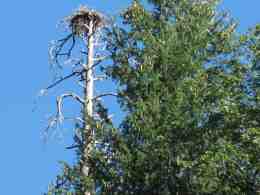
You May Want To Bring A Camera... There Are Large Birds Of Prey High In The Ski